

The engagement ring journey is the longest research cycle in retail
An engagement ring buyer researches for weeks or months, in secret, across dozens of searches — metals, settings, stone shapes, lab versus natural, carat-for-budget math, how to find a ring size without asking. Jewelry store SEO is built on being present across that whole journey, because the store that educated the buyer at every step is the one that feels safe when it is finally time to spend five figures.
That means an education library, not a product grid: what actually changes between VS1 and VS2, how much of a diamond's price is the certificate, what a two-carat lab stone costs against a one-carat natural, which settings survive daily wear. Every honest answer published is a conversation the buyer has with you instead of with a marketplace.
Lab-grown changed the questions, and most jewelers have not answered
The lab versus natural decision now shapes a large share of bridal purchases, and buyer behavior splits cleanly: natural buyers concentrate at the top of the budget range, lab buyers optimize size per dollar, and a meaningful group researches both until late in the process. Content that lays out the tradeoffs without pushing either direction — resale reality, certification differences, how each is priced — earns exactly the buyers still deciding, which is the group most worth reaching.
Jewelers avoid this topic online for fear of undercutting natural sales, and the effect is that marketplaces answer it instead, on their terms. The store willing to publish the honest comparison gets the appointment either way the buyer decides.
Local trust and the appointment funnel
High-ticket jewelry is still bought in person, which makes the local layer decisive: a Google Business Profile with the right categories, photographs of the actual showroom and cases, and reviews that name occasions — engagement, anniversary, heirloom reset, repair. A review mentioning a custom engagement ring does more for both rankings and the next buyer's confidence than five unadorned five-star ratings.
The website's job is to make the next step small. In-person searches convert to consultations, not carts, so every education and product page should offer the appointment plainly — what it involves, that there is no obligation, how long it takes. The jeweler who makes booking feel safe wins the buyer the education content attracted.
Showroom and ecommerce are different search businesses
A jeweler selling online competes on product-level search — structured data, indexable inventory, unique descriptions instead of manufacturer copy — against retailers with enormous catalogs. A showroom jeweler competes on local visibility and education depth, where the big catalogs cannot follow. Most independent jewelers should weight toward the second and treat online sales as a complement, because that is the ground where an independent's advantages — craftsmanship, service, trust, the case in front of the customer — actually show up in search results.
The mistake is doing both halfway: an under-built shop competing with national retailers while the local and education layers sit thin. Sequence matters — own the local market first, then extend.
The jewelry calendar is a publishing schedule
Demand in this industry moves on a known rhythm — engagement season peaking from Thanksgiving through Valentine's, Mother's Day, graduations, holiday gifting, and the steady year-round current of repairs and appraisals. Rankings take months to develop, so seasonal pages must be published a season early: holiday gift guides in early autumn, engagement content strengthened before November.
Repairs and appraisals deserve their own pages year-round. They are lower-glamour searches with steady volume, they bring first-time visitors into the store, and a repair customer handled well is the future engagement ring buyer every jeweler is actually competing for.
What jeweler SEO services should include
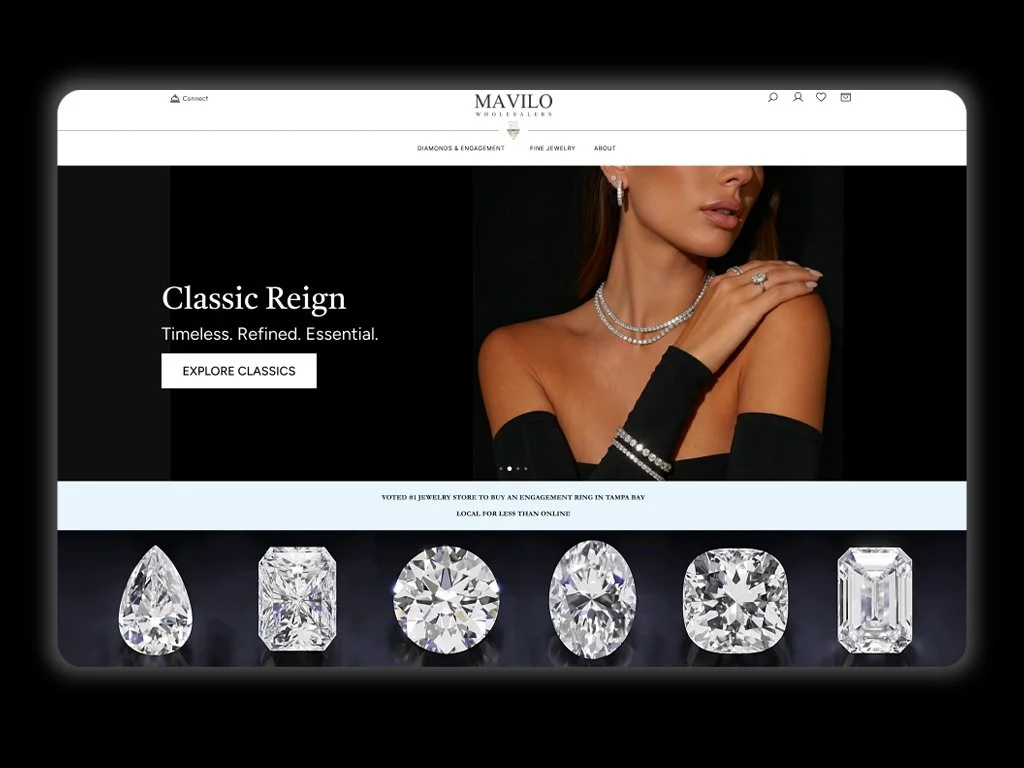
Jeweler SEO services should cover both sides of jewelry businesses: the showroom and the online catalog. For the showroom, that means local search visibility, appointment pages and strong reviews. For the catalog, it means optimized product pages with clear titles, specs and photos, plus technical optimizations like fast images and structured data. Diamond engagement rings deserve special attention: buyers research for weeks, and detailed guides earn qualified traffic long before the store visit. I've done this work for Mavilo Wholesalers since 2021, so these SEO strategies come from running them in a real jewelry market, not from a generic digital marketing checklist. A good jewelry SEO agency or SEO company should report on appointments and sales, not only rankings — the aim is long-term growth for jewelry stores.